February 2026 | 1-Week Sprint
For an internship application, I was asked how Pinterest's core brand idea might evolve into something culturally relevant, differentiated, and emotionally resonant as the platform scales past 600M monthly active users and skews toward Gen Z — while ads, AI-generated content, and faster-moving competitors dilute the meaning of "inspiration." The response covers both product direction and communications strategy.
Redefining the Problem
Pinterest's product has advanced, leaving the brand behind. CEO Bill Ready says Pinterest has "effectively become an AI-powered shopping assistant" — conflating user desire with product development. The platform faces competition on every front: TikTok and Instagram for searchable inspiration, Cosmos and Google Lens for visual discovery, Etsy and Shopify for e-commerce, each with deeper specialization. Meanwhile ads frustrate users, AI slop erodes trust, and Gen Z trends point toward analog desires, intentional scrolling, and underconsumption. The current direction of innovation and efficiency is dissipating brand distinction.
The Insight
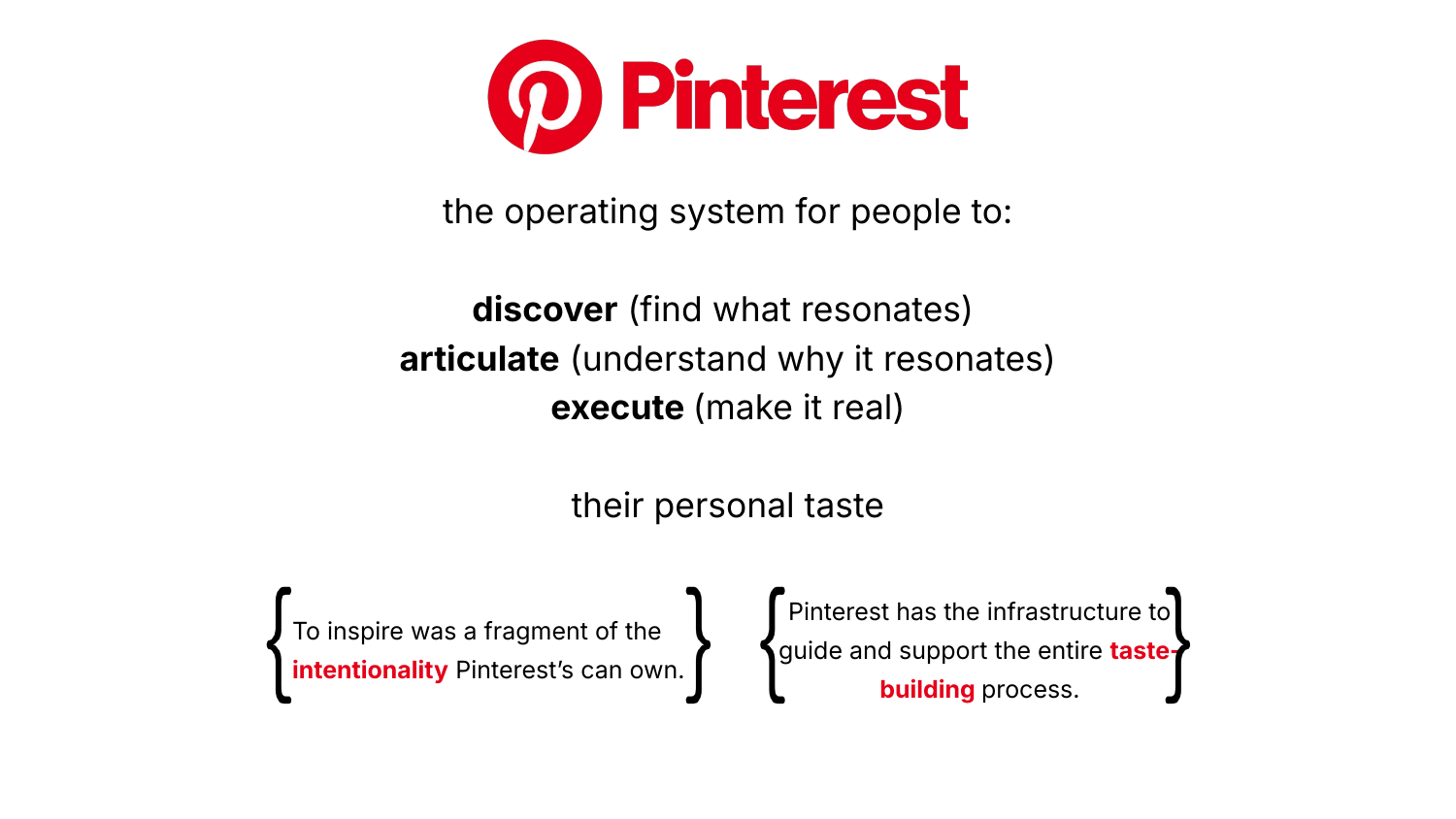
Everyone is optimizing for seamless recommendations and more inspiration. The smart move is to be the only platform that asks: what do you want your life to look like? People don't just want to be inspired. They want to know why something appeals to them and what to do about it. That's taste — and no platform helps you build it. To inspire was a fragment of the intentionality Pinterest can own.
New Approach
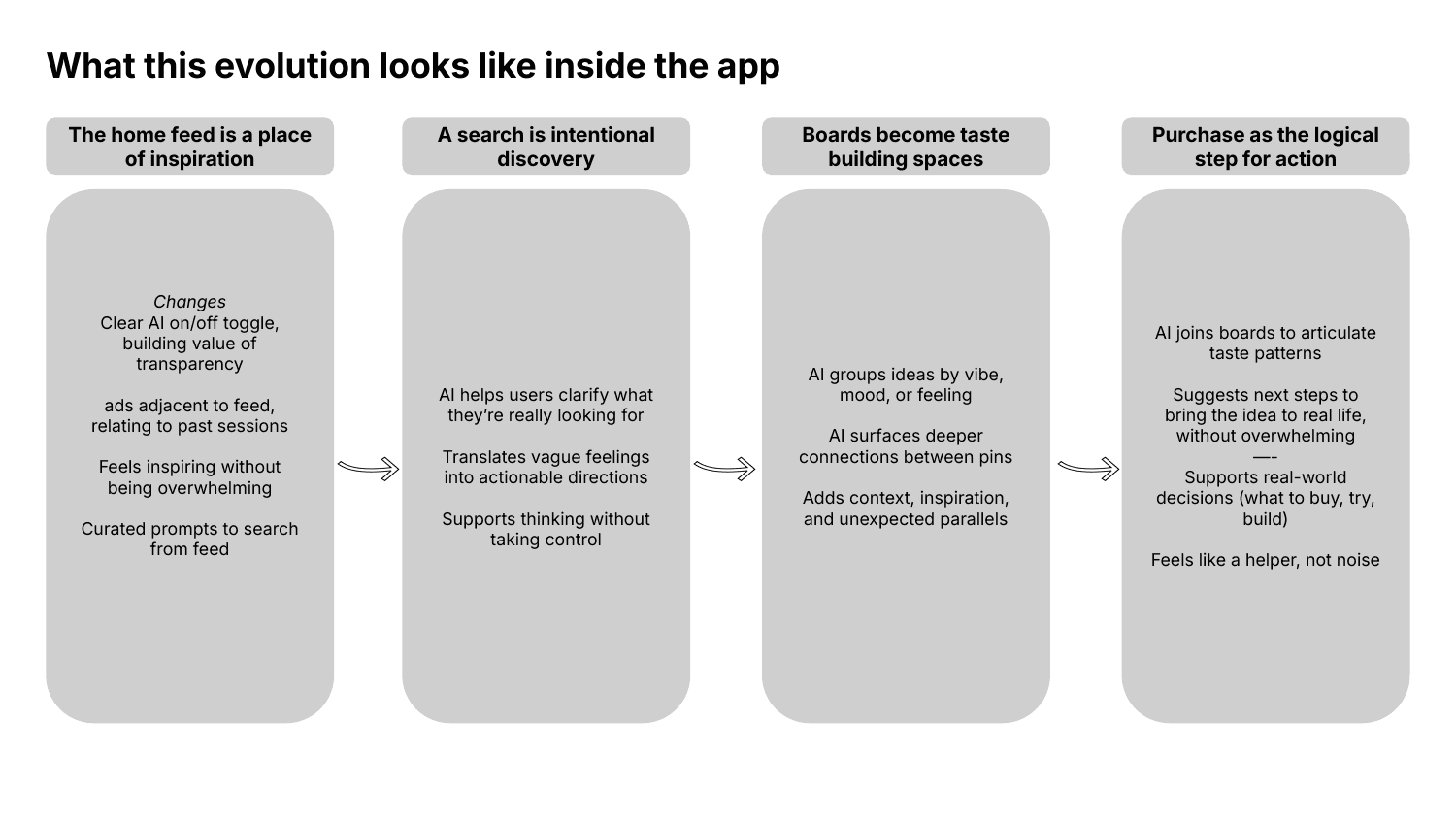
Pinterest becomes the operating system that helps people discover, articulate, and execute their personal taste. The home feed is restored as a place of inspiration — ads adjacent, not embedded, with a clear AI on/off toggle. Search becomes intentional discovery, translating vague feelings into actionable directions. Boards become taste-building spaces where AI groups ideas by vibe and surfaces deeper connections between pins. Purchase becomes the logical endpoint — a helper, not noise.
On communications: executives shift from positioning Pinterest as an efficient product competing in discovery and shopping to a partner in how people build their taste, and commerce is reframed as the natural, user-desired end — a point users arrive at, not something forced upon them. Gen Z does not want more content. They crave a platform that turns the noise into clarity. That's the gap Pinterest is built to fill.
Reflection
This project taught me about maintaining a discipline around separating what a product can do from what a brand should promise. Pinterest's problem wasn't capability, it was that every update spoke the language of efficiency while its users were asking for intentionality. The strongest move in the deck was the smallest — reframing "inspire" as a fragment of a larger promise rather than throwing it away.